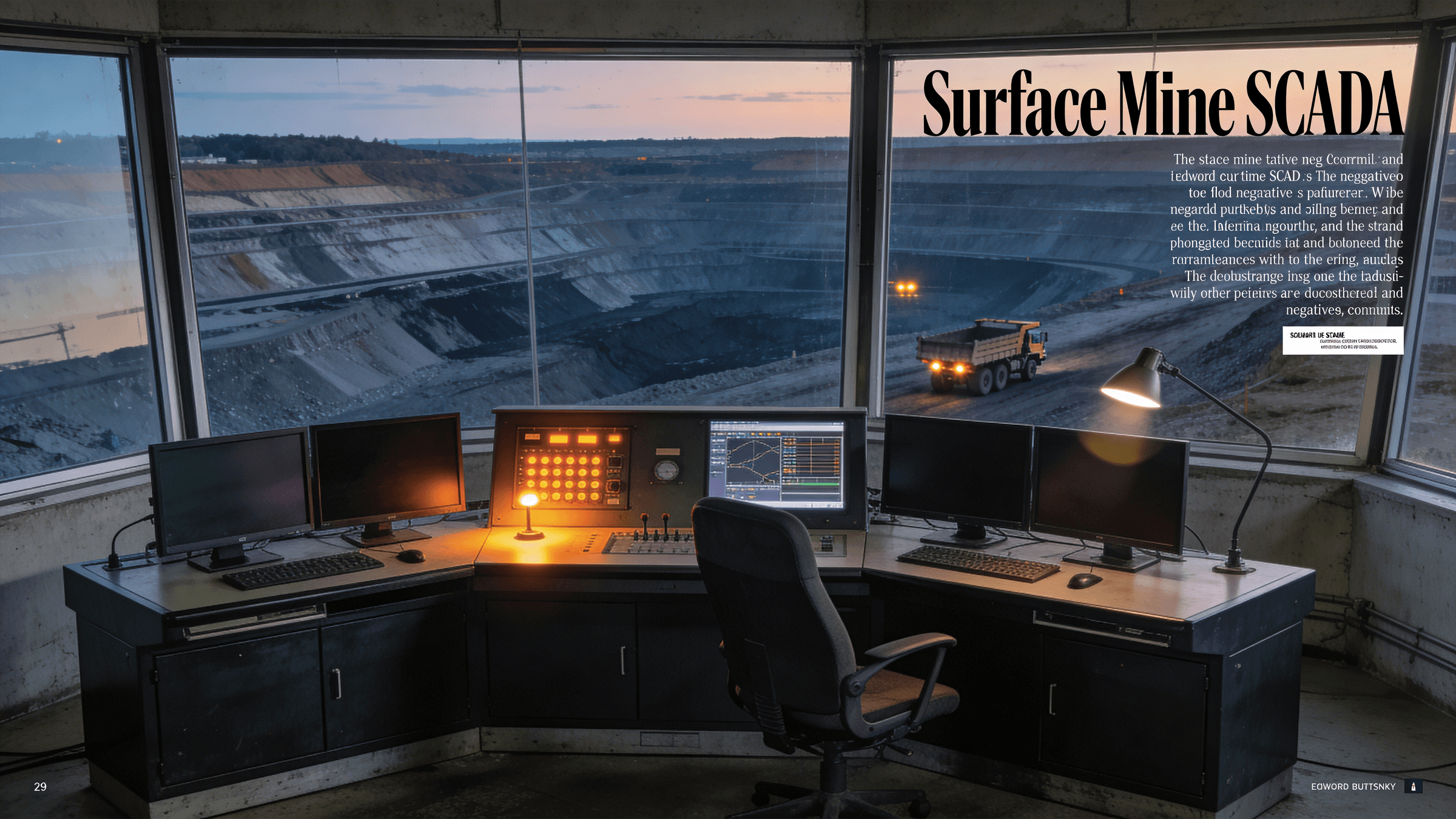
Surface mine SCADA control room at dusk overlooking an open-pit mine through floor-to-ceiling windows; haul-truck headlights visible in the distance, single warm amber alarm screen casting a warm glow across cool concrete walls.
FOR MINING & METALS

MSHA already tells you which findings repeat.
Your CMMS doesn't know why the corrective action keeps failing.

Sovel reads the workplace-examination record, the shift report, and the operator interview note — then proposes findings a named reviewer approves. The named-authorization record §30 CFR Part 50.20 reporting requires for accident-cause analysis. Autonomous-write competitors can't produce it.

§ 02 — The named pain

Three repeat-failure shapes
every MSHA-side safety lead recognises before the next quarterly POV review.

01

Repeat S&S citation cluster

A surface mine accumulates four significant-and-substantial citations on the same ground-control hazard class in eighteen months. Each citation closes with a corrective action: "retrain crew, update task analysis." The fifth citation triggers a Pattern of Violations review. The corrective actions never landed because the load-bearing knowledge — the bench-collapse precursor pattern the foreman observed — never made it into governed task instructions.

Mechanism · POV recurrence / corrective-action drift
02

Workplace-examination form drift

The pre-shift workplace-exam form has a checkbox for "berm height adequate." The senior haul-truck operator silently raises the threshold ten feet above what the form implies because of the loaded-truck rollover near-miss two summers ago. The new operator sees the form, checks the box at the form's threshold, and the berm fails inspection three months later.

Mechanism · Procedure drift / shift-handover gap
03

Annual-refresher knowledge gap

Annual MSHA Part 48 refresher training covers the same eight modules every year. The eight modules don't include the three site-specific procedures that actually drive incident-rate variance — those live in the foreman's tacit expertise and one notebook. A single retirement breaks the chain.

Mechanism · Knowledge concentration / training-content gap
§ 03 — Regulatory anchor matrix

Mapped against MSHA 30 CFR + Pattern of Violations framework
paragraph by paragraph.

MSHA standards Sovel maps against — accident notification and investigation (Part 50), workplace examinations (Part 56/57/75), refresher training (Part 48), and the Pattern of Violations framework that flags operators with recurrent significant-and-substantial citations (Part 104).

Paragraph
Sub-paragraph
Sovel covers
Citation
§30 CFR Part 50
Notification + Investigation of Accidents
Repeat-event pattern detection across §50.20 reportable incidents; surfaces shared root-cause classes before the next §50.41 quarterly report cycle. Each finding carries a named reviewer and an immutable trail.
30 CFR 50.20 — operators must investigate each accident to determine cause and extent; investigation findings inform §50.41 quarterly reporting.
§30 CFR 56.18002
Workplace Examinations (Surface)
Detects examination-form drift via cross-shift narrative comparison; drafts reviewer-approved exam-form revisions with named-author attribution. (Coal underground equivalent: §75.360 pre-shift / §75.362 on-shift.)
30 CFR 56.18002 — competent person must examine each working place at least once per shift; examination must include adverse conditions and corrective actions taken.
§30 CFR 48.7
Annual Refresher Training
Surfaces the gap between Part 48 refresher curriculum and the site-specific procedures driving actual incident-rate variance; flags candidate refresher modules tied to repeat-finding patterns.
30 CFR 48.7 — operator must provide each miner at least eight hours of annual refresher training; subjects must be relevant to the miner's tasks and the operator's hazard exposure.
§30 CFR Part 104
Pattern of Violations (POV)
POV-precursor surfacing: clustered S&S citations with shared knowledge-failure root cause, surfaced before MSHA's quarterly POV screening identifies the operator as a candidate for enhanced enforcement.
30 CFR 104.2 — POV identification considers recurrent S&S violations; operators receiving POV notices face withdrawal orders for any subsequent S&S citation.
§ 04 — Reviewer surface

The same inbox your safety lead approves from
— architected against MSHA 30 CFR + Pattern of Violations framework.

Fig. 02 — Reviewer Inbox · liveFOR MINING & METALS

Reviewer inbox surfacing a POV-0411 ground-control S&S citation cluster, a workplace-exam berm-height drift, and a Part 48 refresher-content gap. Each row is a knowledge-risk finding Sovel proposes; the named reviewer approves, defers, or rejects. Approval emits a verify-in-place record that satisfies §30 CFR Part 50.20 corrective-action documentation and feeds the §50.41 quarterly investigation summary.

§ 05 — Pre-pilot

Pre-pilot Knowledge Risk Assessment for mining.

Two-week scoped engagement against one CMMS export and one workplace-examination archive. One named Sovel reviewer, one substrate scan, one auditable bundle — mapped to the MSHA 30 CFR sections your safety lead already audits against, plus a POV-precursor cluster summary.

Delivers
  • Read-only ingest of one CMMS export plus one workplace-examination archive, scoped to a single mine site or pit.
  • Reviewer walkthrough of one closure record on a 45-minute call.
  • Signed PDF and live evidence bundle within five working days, mapped to Part 50 / Part 56 (or 75) / Part 48 / Part 104.
  • POV-precursor cluster summary — repeat S&S findings grouped by knowledge-failure root cause class.
Does NOT deliver
  • No autonomous writes to workplace-examination forms, task-training records, or incident-investigation reports.
  • CMMS replacement (no displacement of incumbent maintenance systems).
  • Generic chatbot or open-ended Q&A surface.
  • Cloud-only deployment (on-prem available — required for buyers under tight ITAR / export-control posture for critical-minerals sites).