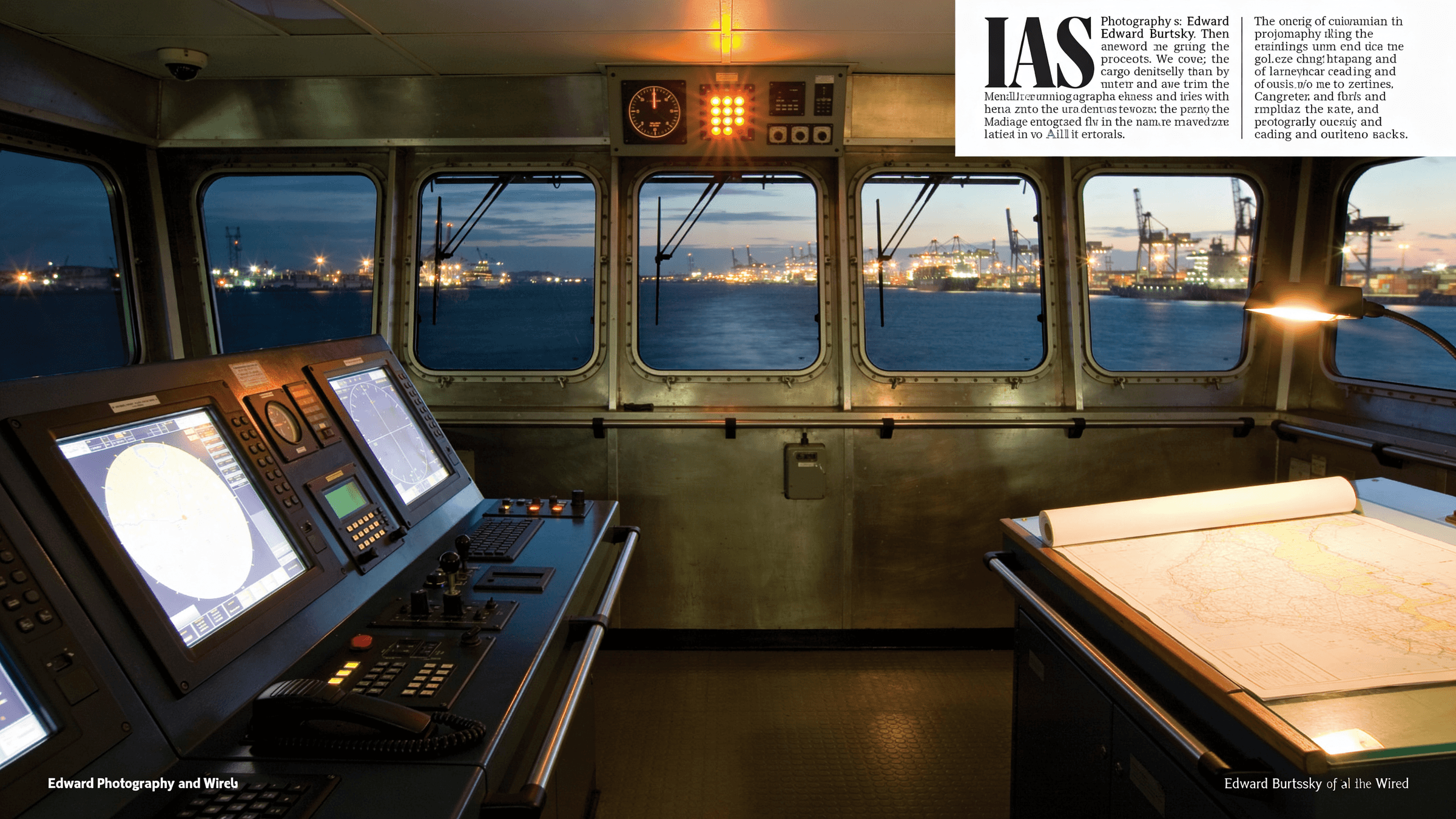
Cargo ship's bridge at dusk; brushed-steel walls, dark navigation consoles spanning the front of the bridge with port-city lights through the windows in the distance, engine-room IAS panel showing a warm amber alarm cluster.
FOR MARITIME & SHIPPING

Port State Control logs every repeat deficiency.
Your SMS doesn't know why the corrective action didn't hold.

Sovel reads the bridge watch log, the engine-room alarm trail, and the chief engineer's debrief — then proposes findings a named DPA approves. The audit artifact ISM Code §9.2 corrective-action documentation requires. Autonomous-write competitors can't produce it.

§ 02 — The named pain

Three repeat-failure shapes
every DPA reviews after the next port inspection.

01

Repeat PSC detention deficiency

Your fleet accumulates three Tokyo MoU detentions across two ships in twelve months on the same MARPOL Annex I deficiency code (15 ppm bilge separator). Each detention closes with a corrective action: "retrain crew, update SMS procedure." The fourth port inspection finds it again. The corrective action never landed because the load-bearing knowledge — the bypass workaround the engine room developed during a 2024 dry-dock — never made it into the governed SMS revision.

Mechanism · Non-conformity recurrence / corrective-action drift
02

Engine-room alarm flood — IEC 62682 ceiling breached

During a manoeuvring evolution, the engine-room IAS generates 412 alarms in 10 minutes — 4× the IEC 62682 ceiling of ≤10 per 10 minutes. To keep the engine in service, the duty engineer silently inhibits three nuisance interlocks. The inhibits stay live across the next watch. The chief engineer learns about them at the post-voyage debrief, not before.

Mechanism · Operator override / alarm rationalization gap
03

Watch-handover annotation lost

The bridge watch hands over with verbal: "keep an eye on No. 3 generator — it's been short-cycling." The pilot card has space for it but no governed annotation field. The next watch logs it as nominal. The generator trips at 03:15 with no captured precursor. The handover knowledge was the only governance against the trip.

Mechanism · Shift-handover gap / knowledge concentration
§ 03 — Regulatory anchor matrix

Mapped against IMO ISM Code + IEC 62682 + LR Vol 1
paragraph by paragraph.

Maritime safety-management standards Sovel maps against — ISM Code clauses governing non-conformity reporting, ship maintenance, and company verification, plus IEC 62682 alarm management as the maritime-overriding standard per Lloyd's Register Vol 1 (September 2024).

Paragraph
Sub-paragraph
Sovel covers
Citation
ISM Code §9
Reports + Analysis of Non-Conformities
Repeat-non-conformity cluster detection across SMS internal audits + PSC inspections + class-society findings; surfaces shared knowledge-failure root causes before the next ISM external audit. Each finding carries a named DPA reviewer.
ISM Code §9.2 — the company should establish procedures for the implementation of corrective action, including measures intended to prevent recurrence.
ISM Code §10
Maintenance of Ship and Equipment
Detects PMS drift via WO narrative + alarm trail cross-reference; flags critical-equipment items where corrective action repeats across voyages. Reviewer-approved PMS revisions carry named-author attribution.
ISM Code §10.3 — the company should identify equipment and technical systems the sudden operational failure of which may result in hazardous situations.
ISM Code §12
Company Verification, Review, and Evaluation
Verify-in-place records as the §12.1 internal-audit evidence: every reviewer-approved closure carries the audit-trail elements ISM external auditors and Recognised Organisations expect.
ISM Code §12.1 — the company should carry out internal safety audits on board and ashore at intervals not exceeding twelve months to verify SMS effectiveness.
IEC 62682
Alarm Management (LR-overriding standard)
Engine-room alarm-flood detection against IEC 62682 thresholds (≤10 alarms / 10 min, top-10 ≤5% of total alarm load); surfaces operator-inhibit overrides as ungoverned knowledge events for DPA review.
Lloyd's Register Vol 1 (September 2024) — IEC 62682 is the maritime-overriding alarm-management standard for ship machinery spaces. Calibrated against CIMAC 2025 fleet baseline (150–250 alarms/hr nominal, 300–500/10min peak burst).
§ 04 — Reviewer surface

The same inbox your safety lead approves from
— architected against IMO ISM Code + IEC 62682 + LR Vol 1.

Fig. 02 — Reviewer Inbox · liveFOR MARITIME & SHIPPING

Reviewer inbox surfacing four maritime-vertical findings — repeat PSC deficiency, engine-room alarm-flood with operator-inhibit override, watch-handover annotation gap, and a ISM §9.2 corrective-action recurrence cluster. Each row is a knowledge-risk finding Sovel proposes; the named DPA approves, defers, or rejects. Approval emits a verify-in-place record that satisfies ISM Code §9.2 corrective-action documentation and §12.1 internal-audit evidence requirements.

§ 05 — Pre-pilot

Pre-pilot Knowledge Risk Assessment for maritime.

Two-week scoped engagement against one ship's PMS export plus the last twelve months of bridge-watch and engine-room logs. One named Sovel reviewer, one substrate scan, one auditable bundle — mapped to the ISM Code clauses your DPA already audits against, plus an IEC 62682 alarm-rationalization gap summary.

Delivers
  • Read-only ingest of one PMS export plus twelve months of bridge-watch and engine-room logs, scoped to a single ship.
  • Reviewer walkthrough of one closure record on a 45-minute call.
  • Signed PDF and live evidence bundle within five working days, mapped to ISM §9 / §10 / §12 + IEC 62682.
  • Alarm-rationalization gap summary against IEC 62682 thresholds, calibrated to CIMAC 2025 fleet baseline.
Does NOT deliver
  • No autonomous writes to SMS procedures, PMS records, bridge logs, or non-conformity reports.
  • PMS / IAS replacement.
  • Generic chatbot or open-ended Q&A surface.
  • Cloud-only deployment (on-prem available — required for ships under flag-state data-residency requirements).